Live. Magazine
Science
Editorial for live N° 18 | Travels in medicine.

Behind the Science
Editorial for live N° 18 | Travels in medicine.
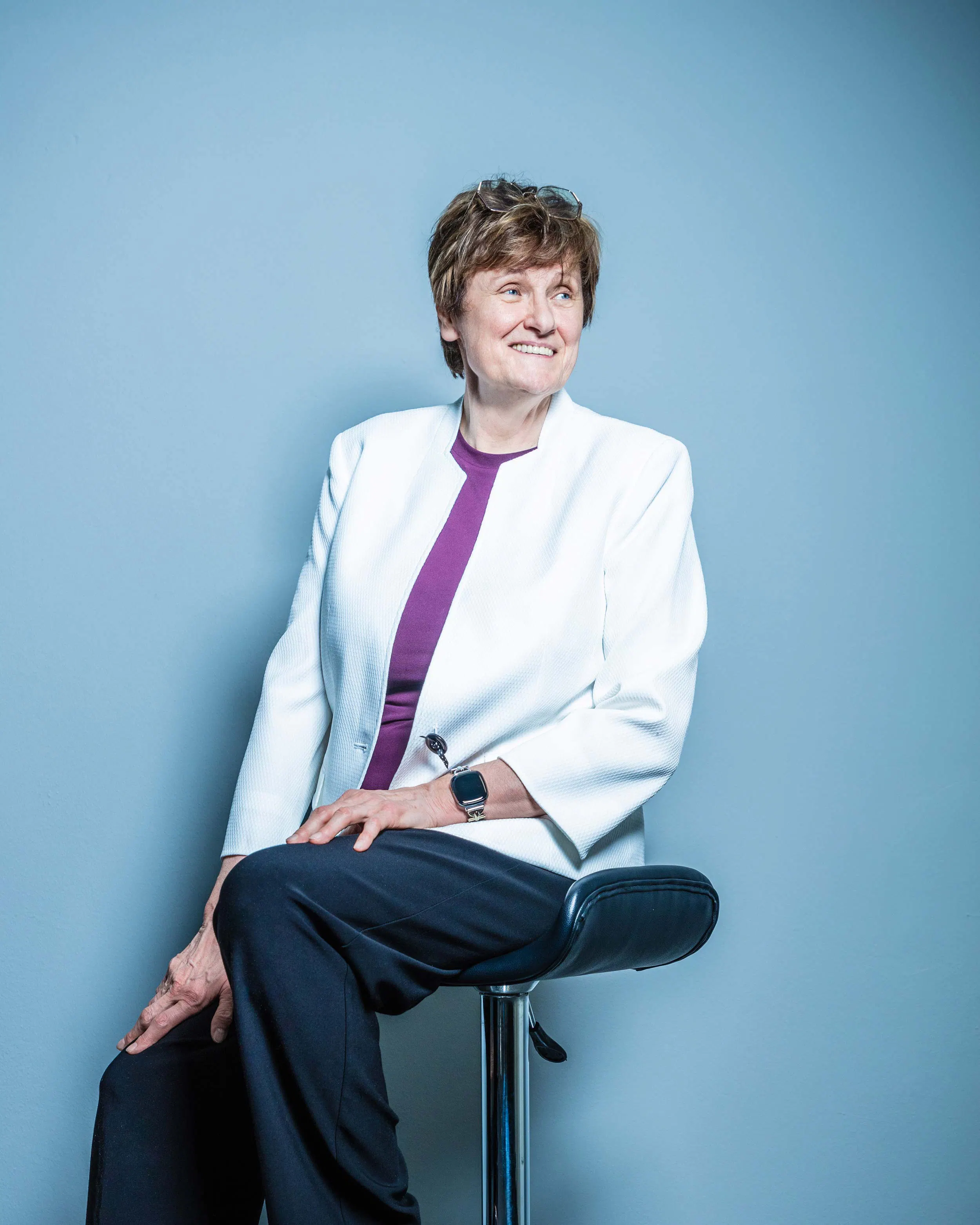
By Nelly Riggenbach, Director for Brand Experience at Novartis. Photo by Roland Schmid.
Dear Reader,
When Novartis embarked on its journey to create an exhibition space around a decade ago, the first idea was to build a corporate learning center that would help associates better understand the essence of our diverse global activities. As the project evolved, the scope and relevance of the exhibition concept broadened, reflecting societal and technological changes.
Fast forward to 2024 and we have not only built an exhibition and meeting space for the public but have been able to attract more than
200,000 visitors since we opened the Pavillon in 2022, inviting our guests to learn more about the pharmaceutical industry and debate relevant healthcare topics as part of our regular Behind the Science series.
What we have experienced so far has exceeded our highest expectations. As a pharmaceutical company based in Basel, we were aware of the interest the public has in our medical operations, but also of the recurrent criticism a large healthcare company like ours can attract given the broad nature of our business, which has so many touchpoints with society. So, we kept our expectations balanced.
The genuine interest we have so far seen shows that our effort to create a space that enhances dialogue with society and nurtures a culture of exchange and collaboration is obviously satisfying a deep-rooted need. We also believe that it is an essential part of our efforts to increase trust with society and learn from the public. This is why we built the Pavillon in the first place.
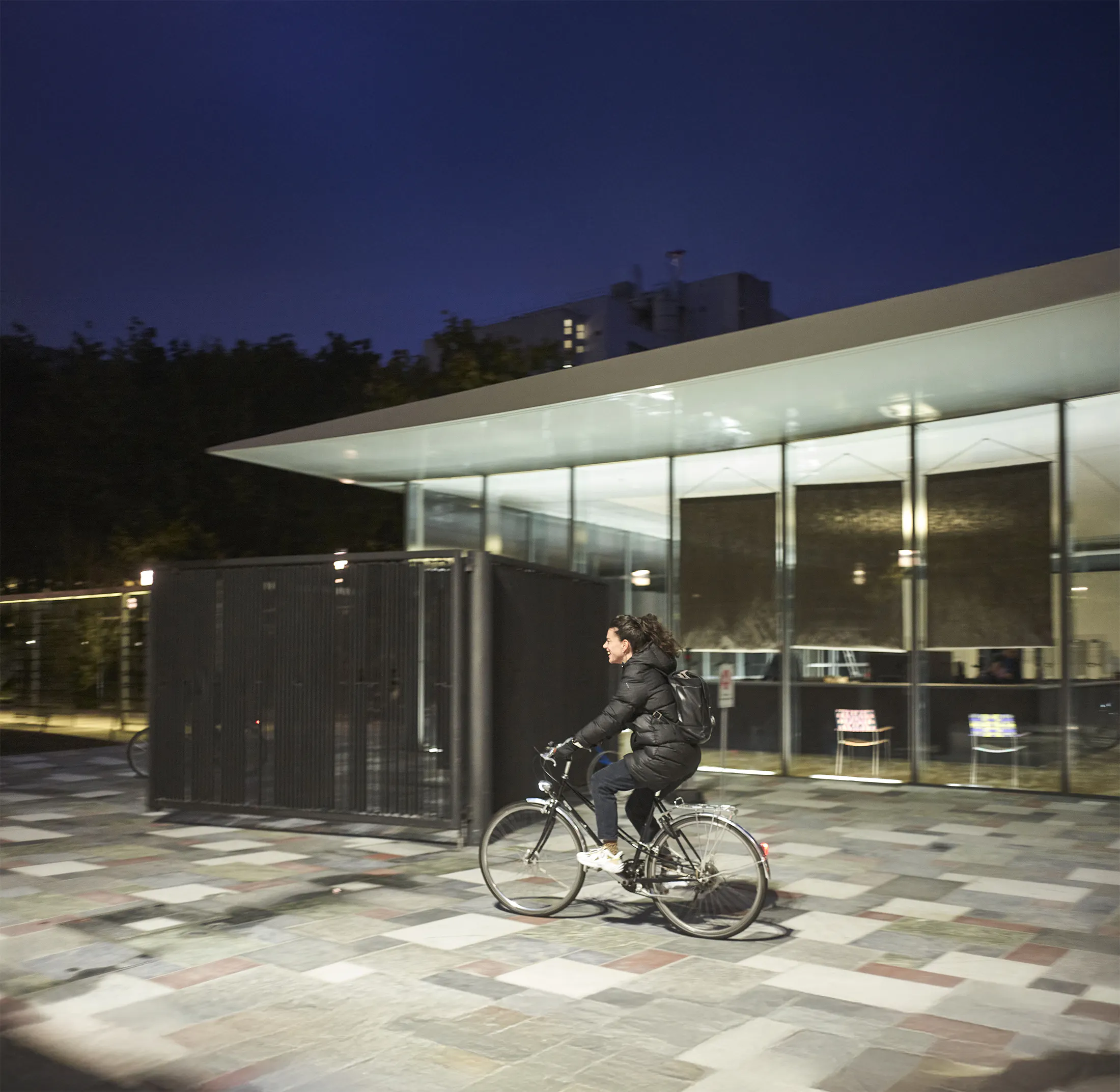
Of course, its circular shape and illuminated facade have made the Pavillon a landmark site in Basel. But the Pavillon is much more than an architectural and artistic gem. It is both an exemplification and an extension of our culture, which rests on values such as quality, diligence, and clarity and thrives on diversity, respect, collaboration, and openness.
In that same vein, we have opened our Campus in Basel to the public, so visitors can experience our headquarters on their own. Long criticized as a “forbidden city,” our headquarter is now part of the city of Basel, in line with the initial concept of Italian architect and city planner Vittorio Magnago Lampugnani, who created the master plan for the Campus and thought of the district as a sort of urban monastery of knowledge that is deeply embedded in the city fabric.
For us, the new connections with our guests and visitors have been extremely enriching. While in the past communication with the public and potential meetings with interested parties were fraught with bureaucratic complexity and impersonal contacts by email or telephone, today we engage directly with those who are interested in our work.
Chance meetings, for which the Campus was built to increase interactions between associates and boost innovation, now happen every day. Whether these are tourists visiting Basel, former employees who want to stay in touch with us or architects and urban sketchers fascinated by the Pavillon and the buildings in St. Johann, interacting with friendly strangers is our new normal.
This openness is part of a cultural change process that we are embracing willingly. Gone are the days of completely siloed corporations with their cold aesthetic of gated communities. We are here for society and part of it. This is what the Pavillon is about and what we wish to express when inviting people to visit the Campus.
The question now is: Where do we go from here? Although we are positively surprised by the public acceptance of the Pavillon and the interest shown in the Campus, we are aware that nurturing healthy relations with the public is not a short-term effort. We must prove our willingness to collaborate every day, and not just in Basel.
As we are strengthening our culture of collaboration and dialogue, we are also working towards bringing our exhibition to other Novartis locations, where we hope that the example of the Pavillon will find imitators. We understand that we will never reach perfection and that our efforts will draw criticism too. But we are open to discussion and engagement.
This is the trajectory on which we will remain. It is the way of learning, knowledge, and progress, a way that Novartis and its predecessor companies have pursued for the last 250 years.
With the publication Travels in Medicine, we want to bring you some of the stories that reflect our traditional collaborative approach to science and medicine and show you the steps that we have undertaken as part of this long journey, which we now aim to take together with you.
The Pavillon and Travels in Medicine are an invitation to dialogue and sharing ideas, which can be the result of a chance encounter, a long-held wish or any trigger that stirs our thoughts and fuels our desire to change the world.
I hope that, as we embark on this journey, some of you will reach out to us to share their stories and ideas, just as Katalin Kariko, Marios Psychogios, Simone Ciluffo, and many others have.
Nelly Riggenbach
Director for Brand Experience at Novartis