Live. Magazine
On the ground
Leveraging data.

Bridging science and care
Interview with Dr. Martin Metz, Deputy Director, Head of Translational Research and Clinical Studies at the Charité - Universitätsmedizin Berlin, Institute of Allergology.
The interview was conducted by Goran Mijuk.
In his calm and understated way, Dr. Martin Metz moves between two worlds that often barely touch: One is filled with white coats, data, and the quiet rhythm of life in the lab; the other with the unpredictability of patients, their pain, relief, and stories. Metz lives at the junction of these two medical highways, a physician and scientist whose work has helped redefine how we understand mast-cell-driven diseases.
Although he looked a bit tired when we met him early one morning in October 2025 in Basel, where he would stay for a day’s seminar on the Novartis Campus to discuss the latest developments in immunology with colleagues such as Novartis program head Tom Severin, he quickly regained his spirit after a coffee and once he started to talk to us about his life and medical passion.
He grew up in southern Germany, studied medicine in Berlin, and, as he told live magazine, research “just happened” to him. It was not a grand plan but rather an encounter that changed the course of his life.
It was a professor who spoke with infectious passion about the hair follicle “for an hour,” Metz recalls, “and I thought, this is the best thing you can work on.” That spark led him to a doctoral project in neuroimmunology and to mast cells, the small but powerful immune cells that would become his lifelong fascination.
From early on, Metz resisted the idea that a physician’s career had to follow a single track. He completed his postdoc at Stanford, immersed in basic science, and later returned to Germany to train as a dermatologist at the Charité in Berlin. There, his dual commitment to patients and to molecular insight shaped a career that has influenced – with more than 300 papers to his name – the field of allergy and immunology.
“After my postdoc,” he says, “I realized that I’m a physician with my full heart. Dealing with patients is something truly worth doing. But I maintained the fascination for science at the same time.”
That double heartbeat defines everything he does today. Together with long-time collaborator Marcus Maurer, who unfortunately died during a hiking accident a few years back, Metz helped build a laboratory and specialty clinic that became a reference point for mast-cell research.
Their approach was radical in its simplicity: treat the patients, study the cells, and never lose sight of either. It not only cemented Charité’s already outstanding reputation as a world-leading clinical center. The strategy also helped Berlin’s largest hospital to become a partner of choice for key pharmaceutical companies, including Novartis, who seek Charité’s collaboration when it comes to developing new treatments.
The downside to this is that Metz has a demanding life. He travels constantly to conferences, advisory meetings and patient gatherings. Yet, he speaks about the strain without drama. “The work itself isn’t stressful,” he says. “It’s being away from family. That’s the hard part.” His family remains in Berlin, where his children are in school and his wife works in education. When he is at home, he walks his dog early in the morning before heading to the Charité. “That’s when I think best,” he says.
He is modest about achievements that have shaped international guidelines and helped bring new therapies to patients worldwide. What seems to matter more is the method, the intellectual discipline of asking the right question at the bedside and pursuing it in the lab. “Without clinician scientists,” he insists, “the bridge is missing.”
At a time when Europe worries about losing its edge in medical innovation, Metz embodies what that edge depends on: persistence, curiosity, and public investment in research that serves real human need. “I’ve never had a lifetime contract,” he notes. “Everything relies on external funding. Without it, this work would simply not be possible.”
His story is both deeply personal and quietly political. It is a reminder that progress in medicine depends not only on discovery but also on those willing to live in two worlds at once.
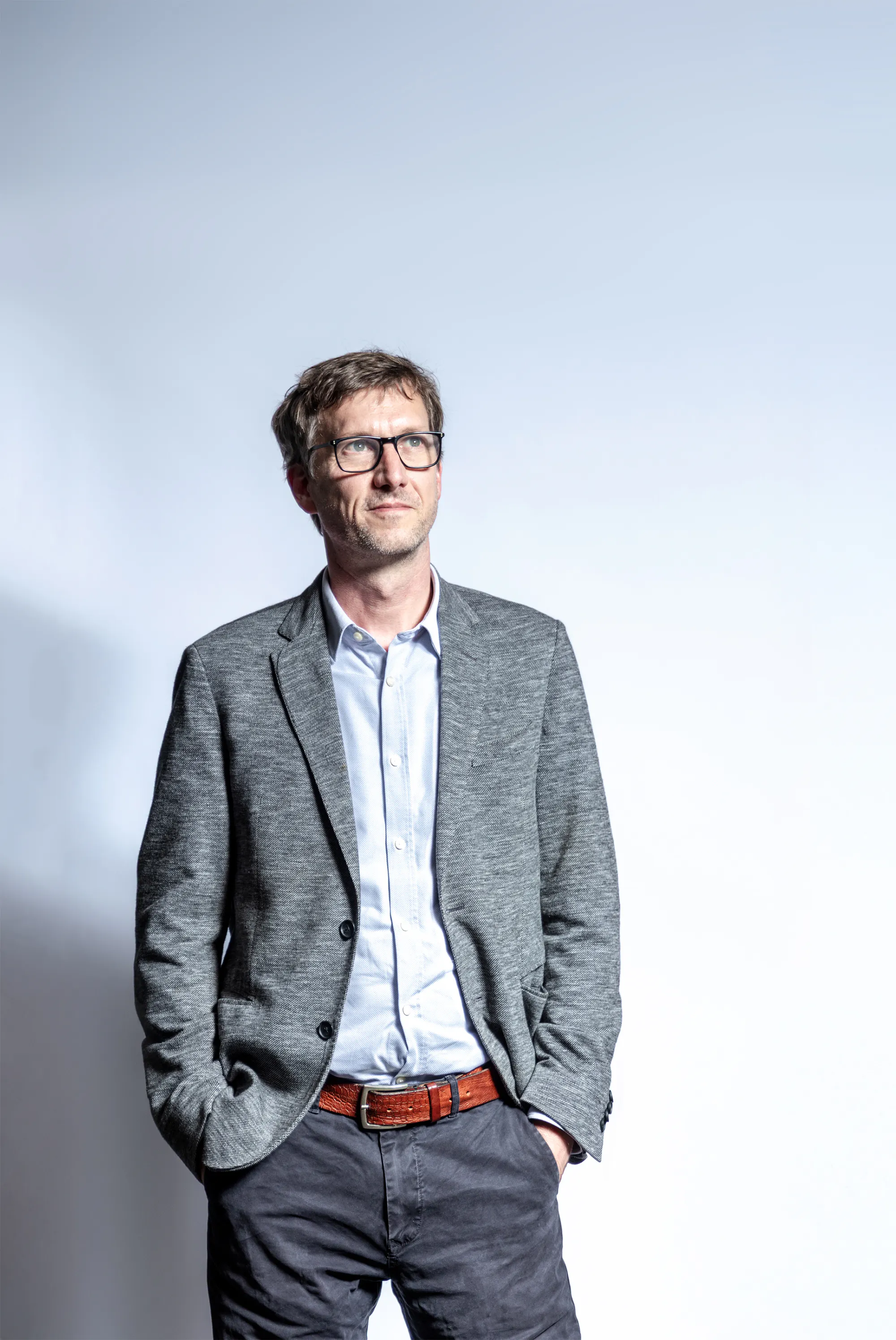
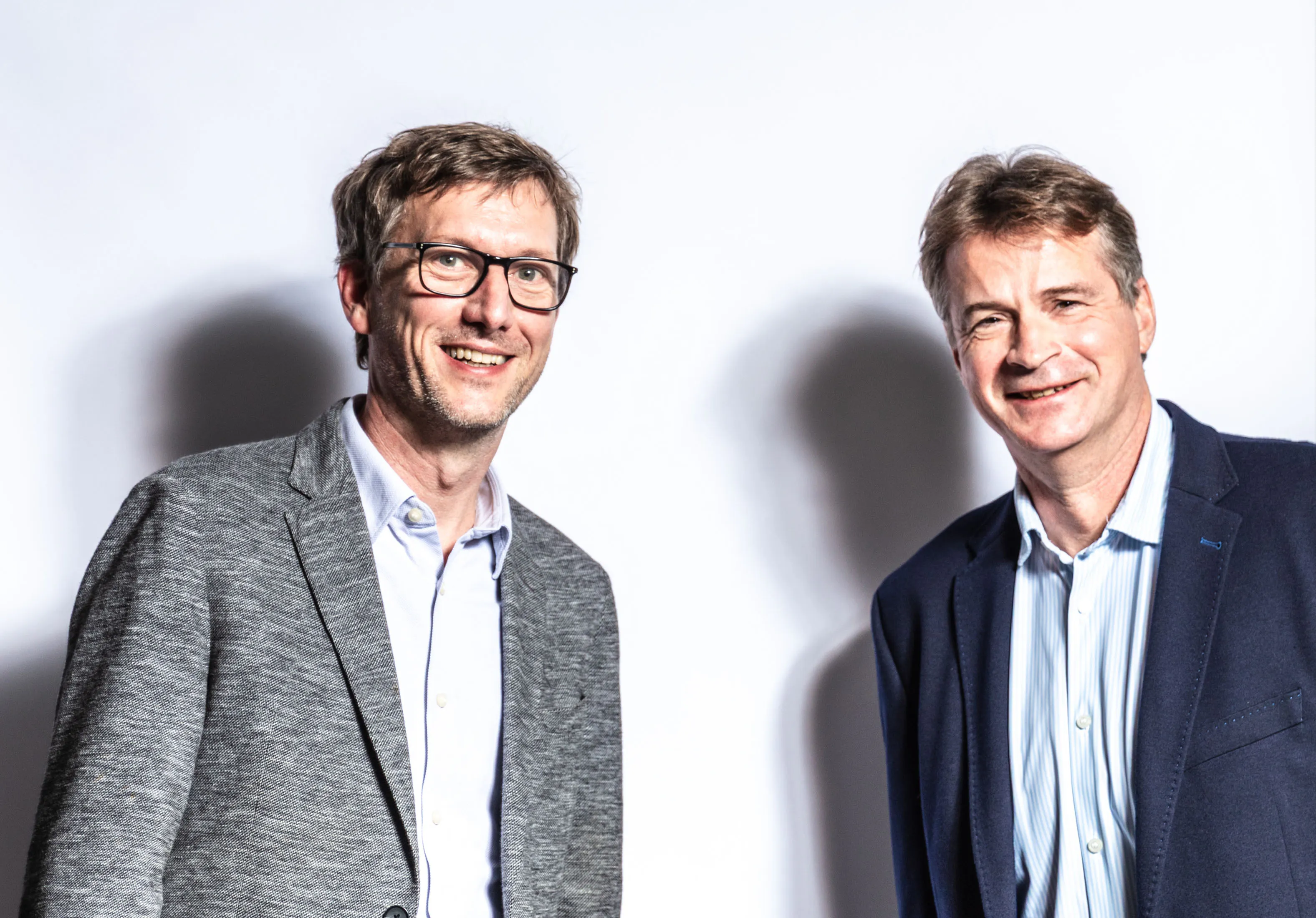
Dr. Martin Metz, Deputy Director and Head of Translational Research and Clinical Studies, Charité – Universitätsmedizin Berlin (Institute of Allergology), with Tom Severin, Novartis Program Head.
Dr. Metz, you’ve said your path into science was almost accidental. How did it begin?
In retrospect you can explain it, but at the time it just happened. During medical school I saw an advertisement for a doctoral thesis in neuroimmunology. I met this professor who talked for an hour about the hair follicle so passionately that I thought, this is the best thing you can work on. I read a paper he gave me and found the mast cell most intriguing. Since then, I’ve stuck with it.
What made mast cells so interesting to you?
At that time everyone was working on T-cells and dendritic cells. Mast cells were seen only as “the allergy cell.” I wanted to know what they were really for, why nature came up with them. That curiosity became my first scientific life.
And yet you never left the clinic. How did you balance both worlds?
I didn’t plan it. I loved basic research, the rigor, the constant thinking. But when I came back from my postdoc, I also loved treating patients. That was my second revelation: I’m a physician with my full heart. So, I decided not to choose. I kept a lab but also helped build specialty clinics. Our idea was to bring the same scientific discipline we had in the lab into the clinic, to study our patients’ biology and help them directly.
You describe that as the role of the “clinician scientist.” What does that mean to you?
It means you don’t stop at either end. You see the patient and ask, what’s happening here? Then you go to the lab and test it. You might approach a company and say, this target looks interesting; maybe you have something that could help. Without clinician scientists, this dialogue doesn’t happen.
Why are there so few clinician scientists?
Because it’s hard. When you work on the ward twelve hours a day and then go into the lab at night, that’s not sustainable. You need institutions that understand the value of this role and protect time for research. I was lucky to have mentors who did that. But in many countries, there’s no structure for it, so people must choose. Often, they choose one world over the other.
You’ve built a large international network. How important is collaboration?
It is essential. Science doesn’t happen in isolation. When you’ve done the work yourself, people know you understand it deeply. That makes you credible, and that credibility helps build networks. It also helps when you talk to colleagues at meetings; they listen because they know you’ve seen the patients and done the science.
You’ve often worked closely with industry partners. How do you see that relationship?
It’s crucial. Clinical research can’t happen without industry, and it shouldn’t. We understand the patients; they have the capacity to turn insights into treatments. The best collaborations start early when experts are discussing mechanisms, designing studies together, asking the scientific questions that really matter. It has to be a partnership built on trust and shared curiosity.
In Europe, there’s concern that medical innovation is lagging behind the US. What’s your view?
It’s a question of funding and structure. The US had the NIH model, a hospital built for research. Many of those scientists came from all over the world. Now funding there is being cut, and Europe should learn from that. In Germany, we’re still relatively lucky; we have the DFG, the Fraunhofer, the Max Planck and Helmholtz institutes. But it’s getting tougher. Without public investment, this work is impossible. We must keep that motor alive.
You’ve never had a lifetime contract, that’s surprising for someone of your standing.
Yes, I’ve always relied on external funding. It keeps you sharp but it’s also precarious. Science needs stability to thrive. If you want clinician scientists, you have to make it possible for them to survive economically, otherwise you lose talent.
What keeps you motivated despite the pressure?
The patients. Seeing someone who’s suffered for years finally get relief, that’s everything. And the science itself, of course. Discovering something no one has seen before is still thrilling.
How do you manage the personal side, the travel, the constant demand?
It’s not the travel itself, it’s being away from family. I don’t like being in hotels. The hardest part is that my family doesn’t like it either. But the conversations with colleagues, the exchange of ideas, that’s the lifeblood of this job. Whether it’s in Berlin or Boston, that’s what keeps me going.
Finally, if you could send a message to young doctors or scientists, what would it be?
Don’t predefine your life too early. Stay curious. Do what interests you most at that moment and let it develop. Medicine needs people who can think across boundaries, who see the patient and the molecule at the same time. That’s what clinician science is about.