Live. Magazine

On the ground
Leveraging data.

New Yorkers stand to get an AI heart health boost – and so do other cities around the world
Depending on where one lives and works in New York City, life expectancy can differ by up to 11 years. In partnership with the health department of New York City, the Novartis Foundation, Microsoft’s AI for Good Research Lab, and several academic and community partners aim to change such inequity and strengthen heart health for city residents by leveraging data and artificial intelligence. The initiative, called AI4HealthyCities, will serve as a blueprint for other cities around the world.
Text by Goran Mijuk, Photos and videos by Ashley Gilbertson and Laurids Jensen.
In the era of big data sometimes a single piece of information can make all the difference. This is what happened to Helen Arteaga-Landaverde, CEO of NYC Health + Hospitals/Elmhurst, when she browsed the New York Times at the height of the pandemic, spotting an article which described how high-school kids in Queens had abandoned their plans to go to college and instead were looking for jobs to support their families.
Arteaga-Landaverde was quick to react. “Once we learned about this, we went into recruitment mode and visited local high schools. We said to the students: ‘If you’re not planning to go to college because you can’t afford it and because there are other issues affecting your family, let Elmhurst Hospital help you. Start your career with us.”
Within a few weeks, Elmhurst Hospital, which serves nearly 1 million people in the borough of Queens, hired more than two dozen students, who switched their career plans and were ready to pursue their careers within New York City’s public healthcare system to assist their families.
“It was a huge turning point for Elmhurst and helped us strengthen our reputation,” Arteaga-Landaverde says. “We provided crucial and lifesaving care during the pandemic, but we are also proud that we lent a hand to the community economically by providing jobs to people from our neighborhood.”
“Even if I could just get blood pressure data in my community, that would be huge. There is so much power in that.”
Helen Arteaga-Landaverde, CEO of NYC Health + Hospitals/Elmhurst.

Arteaga-Landaverde now hopes for more data-driven insights like this as she is convinced that, with a better understanding of the realities in Queens, she can make smarter decisions and help improve outcomes for patients. “Our decision to initiate a hiring drive was based on just one data point. Now, could you imagine if I get that type of data on hypertension, diabetes, obesity? Even if I could just get blood pressure data in my community, that would be huge. There is so much power in that.”
Working together to push public health
Such power could soon come to Elmhurst as the institute is part of a program that aims at leveraging New York’s available health and socio-economic data to better understand the city residents’ heart health risks and create a more equitable healthcare infrastructure.
Initiated by the Novartis Foundation and developed in partnership with Microsoft’s AI for Good Research Lab, AI4HealthyCities brings a broad range of partners to the table such as city officials, academia, including the New York University School of Global Public Health and Weil Cornell Medicine, as well as community organizations. Together, their goal is to make this city of 8.7 million a healthier place.
Quality time with the family often means a trip to the local soul food joint.

One of the key drivers of the initiative is Novartis Foundation Head Ann Aerts, who for years has been a vocal proponent of marrying digital technology with medicine to help invigorate people’s health. A medical doctor and population health expert, Aerts has deep knowledge of the pharmaceuticals industry. Yet, a large part of her thinking about public health was shaped by her experience at the International Committee of the Red Cross.
“When I was working as a medical doctor in low- and middle-income settings for the Red Cross, I realized there’s only so much you can do as one person,” Aerts said about her field experience during the early part of her career. “In the beginning, my thinking revolved around how we can make better use of existing infrastructure,” Aerts said. “Over the years, however, and as technology evolved, data and technology became increasingly important for understanding how we can improve the health of entire populations,” she added.
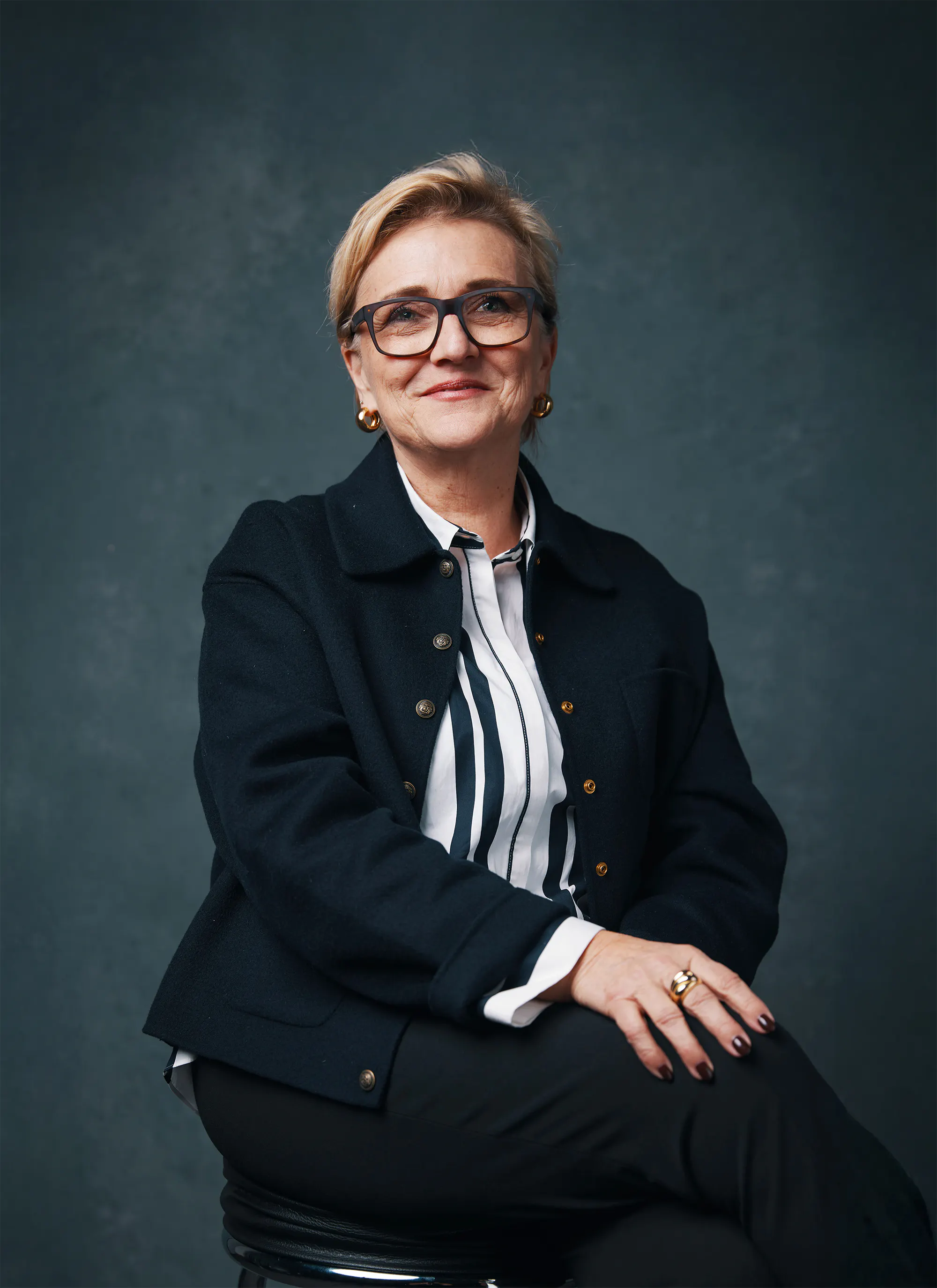
Ann Aerts, Head of the Novartis Foundation.
From telemedicine to big data
One of the first technology-driven projects Aerts led after joining the Foundation in 2013 was a telemedicine program in Ghana with the goal to increase access to healthcare in remote areas. As part of the project, community health workers were equipped with mobile phones and were assisted and guided by experienced nurses, midwives, and doctors at a teleconsultation center in a referral hospital.
The initial pilot, including partnerships with the telecom and IT industry, was so successful that it quickly gained traction and convinced Ghana’s government to roll out the telemedicine program across the country. Since its inception, millions of people in Ghana have benefited from upgraded healthcare delivery, which was also vital during the coronavirus pandemic.
Soon after, Aerts launched the CARDIO4Cities program to improve heart health in underserved urban populations, which confirmed that data and digital technologies can be used to strengthen population health. The results were impressive: In São Paulo, for example, the program helped control rates for high blood pressure patients to triple after just one year following implementation and helped avert up to an estimated 13 percent of strokes – reaching levels that are better than in many European cities. Similar strong results have been achieved both in Ulaanbaatar and in Dakar.
Based on these encouraging outcomes, the Novartis Foundation now aims to work with coalition of co-funders to enable governments and partners to replicate the CARDIO4Cities approach in their respective metropolitan areas, with the goal to expand the initiative to 30 cities around the world within the next three years.
“These programs convinced us that data and technology can be true game changers in healthcare and population health,” Aerts said. “As a result, we extended our reach and became curious how we could unlock the power of data even more, not only to improve heart health but also to understand which underlying social, economic, and environmental determinants mostly drive health outcomes in urban populations.”
Pretzels and hot dogs – who would say no?
Fortunately, New Yorkers can get fresh produce at a growing number of farmer’s markets.
Combining the best of two worlds
To deepen its engagement in the data and technology arena, the Novartis Foundation entered a partnership with Microsoft in 2019 with the goal to combine top-notch expertise from both the health and data industries, first in leprosy and now in cardiovascular health, which is one of the most pressing health issues around the world.
Every year, according to the World Health Organization, over 20 million people die because of poor heart health. This is not only due to a lack of access to care or life-saving drugs, but more to a lack of early detection of cardiovascular risk, or difficulty to access healthy lifestyle options.
A young father with his newborn is carefully choosing vegetables at a local farmers’ market.

A model developed by the University of Wisconsin Population Health Institute with the Robert Wood Johnson Foundation confirms this view. According to the institute’s researchers, medical care – or direct access to medicines – only determines around 20 percent of health outcomes. Other elements are more important, such as the environment, and social and economic factors, which weigh on a person’s health situation and behavior in a whopping 80 percent of outcomes.
Such factors can lead to the reality that residents in neighboring zip codes have drastically different cardiovascular health and life expectancies. For example, the life expectancy of a child born to a family living in the Upper East Side of New York City is 11 years longer than that of a child born in the neighborhood of Brownsville in Brooklyn.
Healthcare revolution
To change this, understanding how people live and work and what kind of healthcare infrastructure they access is vital to help improve outcomes. And here is where data science and technology come in as new analytic tools such as machine learning offer the prospect of shedding light on how social determinants and health are connected.
Microsoft expects nothing less than a revolution: “Combining anonymized population data from many different sources enables us to use machine learning to go down to street level in assessing degrees of cardiovascular risk,” says Juan Lavista Ferres, Chief Data Scientist at Microsoft. “If properly applied, this could revolutionize preventive interventions in heart health.”
Likewise, José A. Pagán, Department Chair in the Department of Public Health Policy and Management at the New York University School of Global Public Health, is confident that the AI4HealthyCities initiative can make a huge impact. “What is really important here is that we are able to work from a cross-sectoral point of view and bring experts from all healthcare domains to the table.”
While the potential is high, collecting and combing diverse data and learning the right lessons from this is far from easy. First, there is the challenge of cleaning up unstructured data sets. Then, data sets can be missing or incomplete. Third, data sets can also be biased, which triggered a lecturer at New York University to hold a talk on whether robots are racist.
In spite of these hurdles, which are common in any big data effort, scientists are confident that it can generate new insights. “Of course, there are challenges and pitfalls we need to be aware of,” said Ji Chang from the New York University School of Public Health, who is working on the program. “But in general, the hope is to combine data sets that can help provide decision makers with tools to make the right choices.”
As part of setting up the system, Ji Chang explained, data scientists are working with publicly available data sets on social determinants as well as classic health data. Publicly available data includes crime data, the number of rats and cockroaches in certain areas, parks, or the number of tobacco retailers, among many others.
“I could proactively create intervention programs and community outreach that would help us identify patients who need help”
Helen Arteaga-Landaverde, CEO of NYC Health + Hospitals/Elmhurst.

These data sets are publicly available and need to be broken down by zip code and then combined with classic healthcare data to help decision makers understand how they can best intervene to strengthen health in their respective areas.
“In our discussions with decision makers, it became increasingly clear that what they need is very granular data,” Ji Chang said. “While there is plenty of data available about the general state of the population, what is lacking are insights on how certain city parts are affected by diseases because of specific underlying social, economic or environmental determinants.”
As an example, Ji Chang said that decision makers are not just curious about how many people in New York are monitored and treated for hypertension. Rather, they are eager to have a better understanding of how many young people, for example in a high-crime neighborhood, have been diagnosed with hypertension but not received further care.
“If we can answer questions like this, it would be a real revolution because it will give decision makers exactly what they need,” Ji Chang said. “Likewise, even as we pin our hopes on data and digital, we always have to keep in mind that the healthcare system is run by people and that we need to take in all the views from all the players in this complex network.”
Responding in the right way
“The ability to have access to very granular data would be tremendously helpful to our healthcare facility,” says Elmhurst Hospital’s Helen Arteaga-Landaverde. “I would not only be able to understand the situation ‘on the ground,’ but could also proactively create intervention programs and community outreach that would help us identify patients who need help to get them connected to a provider and institute the right treatment options for them.”
This, as she says, would also help her to better manage increasingly scarce funds. “As everyone knows, healthcare is under continual cost pressure and, as the CEO of a hospital, I need to make sure that we allocate funds efficiently. If I know whom to address, not only can I communicate in the most effective fashion, I can also find the right patients and help them before their conditions progress and become life-threatening.”
And Arteage-Landaverde may soon be able to do just that: Based on data stemming from electronic health records and publicly available data on socio-economic and environmental factors across town, AI4HealthyCities uncovered several distinct associations worth investigating in New York City’s more than 2,000 census tracts. At the 79th United Nations Global Assembly, the Novartis Foundation and partners presented these initial insights on potential connections between social determinants of health (SDOH) and cardiovascular health across the city, paving the way for targeted interventions to benefit diverse urban communities.
For example, areas with the highest prevalence of diagnosed hypertension were primarily located in the Bronx, Northern Manhattan, Eastern Queens, and Southern Brooklyn. Analyses indicated that regular commutes above one hour on public transport, reliance on public assistance income or SNAP benefits, air pollution, and living alone above the age of 65 may drive high hypertension prevalence in these neighborhoods.
Hamburgers, pizzas, and hot dogs remain New York’s favorite dishes.

Similarly, areas with high prevalence of diagnosed diabetes were primarily concentrated in the Bronx, Northern Manhattan, Eastern Queens, and Southern Brooklyn. Analyses suggested that regular commutes above one hour on public transport, lower educational attainment, low rates of broadband access, and living in single-parent households might act as contributing factors to high diabetes prevalence in these neighborhoods.
AI4HealthyCities furthermore explored the prevalence of undiagnosed hypertension, which was found to be higher in parts of Lower Manhattan and the more affluent parts of Queens and Brooklyn. This supports existing research that groups which appear to be at lower risk of hypertension have a higher chance of remaining undiagnosed should they develop the disease.
While the data does not imply any causations, Ann Aerts sees big potential for New York’s heart disease patients – and for cities around the world. “These initial findings provide a more detailed understanding of specific variables and how they potentially compound. It’s a crucial step in empowering authorities to take informed and precise action, specifically in the form of area-based interventions,” she said. “The reason we have launched AI4HealthyCities in New York more than two years ago is the city’s wealth of data. By now, we have initiated further programs in Singapore, Helsinki, Lisbon, Ulaanbaatar, Basel and most recently Shanghai.



The Novartis Foundation designed, co-developed and validated the approach in collaboration with the health authorities in three pioneering cities: São Paulo, Brazil; Dakar, Senegal; and Ulaanbaatar, Mongolia.
This approach is currently being replicated in over twenty cities globally.
The aim of CARDIO4Cities is to impact the heart health of 150 million people in 30 major cities by 2030.
Findings from all these data-rich cities have the potential to deepen our understanding of the drivers of health across continents. Once that solid baseline is established, AI4HealthyCities even hopes to serve as a blueprint for improving urban health in data-scarce regions,” she explained.
Aerts regularly ensures that the Novartis Foundation and its partners never lose sight of the heart of the matter: “Research for the sake of research will not get us anywhere. To really make a change for millions of patients, we need to walk the full distance and bridge from theory to practice, bringing interventions to the communities suffering from disease wherever and whenever they need it. Our past endeavors have shown that we can do it and that we can respond to the challenges on the ground.”