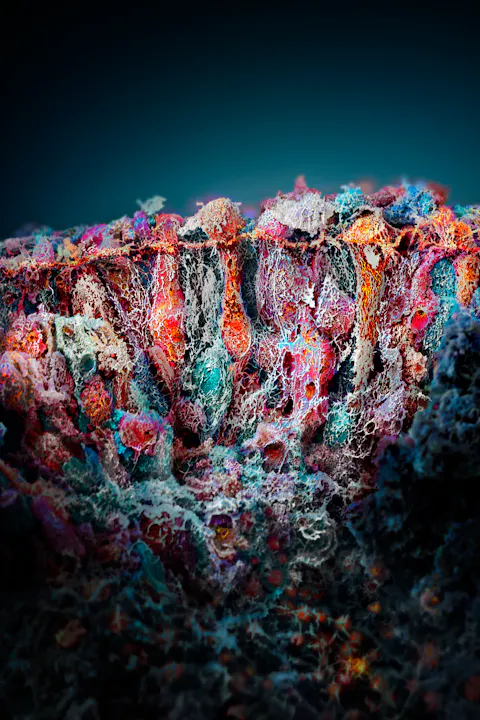
Science Fighting through the millennias. Enable sound for the full experience.
Towards eliminating Malaria The first malaria medicine for newborn babies and young infants received approval from Swissmedic in July 2025. It was a major milestone for Novartis that marked a significant advancement in the global fight against malaria and was the latest breakthrough in a long list of achievements and upcoming medical innovations designed to eliminate malaria for good. By Goran Mijuk.
1900
Often referred to as ‘the great killer’, malaria has been known for millennia but was little understood until the late 19th and early 20th century. It was often treated with natural remedies such as quinine, which was extracted from the cinchona tree bark.
Only when researchers such as Charles Louis Alphonse Laveran, Ronald Ross and Henry Edward Shortt unveiled the mechanism of the diseases, the first medicines were developed.
But because malaria is caused by a parasite, resistance to treatments would soon become a major challenge, requiring continued research with Novartis and its predecessor companies being active in the field for almost a century.
1939
Paul Hermann Müller, a chemist at Novartis predecessor J.R. Geigy, discovers the use of DDT (dichlorodiphenyltrichloroethane) as an insecticide, earning him the 1948 Nobel Prize in Medicine.
DDT helps eliminate malaria in the USA, Canada and Europe, but is widely banned for agricultural use in the 1970s due to environmental concerns, although later reauthorized by the WHO for malaria control.
1957
Rudolf Geigy of Novartis predecessor J.R. Geigy establishes a field laboratory for the Swiss Tropical Institute in Ifakara to study diseases like malaria, laying the foundation for today’s training center.
1972
Artemisinin, derived from Artemisia annua, is discovered by Chinese scientists as a highly effective response to drug-resistant malaria. Known as ‘qinghao’ or ‘sweet wormwood’, the plant is referenced in ancient Chinese medical texts as a treatment for intermittent fevers.
1985
The U.S. Army and the World Health Organization jointly develop mefloquine to treat drug-resistant malaria strains. It is widely used until resistance limits its effectiveness in certain regions.
1994
Novartis predecessor Ciba-Geigy signs an agreement with Chinese partners to search for new medicines for malaria.
1999
Novartis receives international licencing approval for a new type of malaria treatment, called an ‘artemisinin-based combination therapy’, or ACT.
2000
Data source: IHME, Global Burden of Disease (2024)
Global malaria deaths peak at approximately 896,000, with significant economic impacts, especially in Africa, where malaria reduces annual GDP growth by up to 1.3% in affected nations. The sharp spike is due to malaria becoming resistant to all known treatments by the 1990s.
2001
Novartis launches the Malaria Initiative and partners with the World Health Organization to supply ACT treatments at no profit. Within just a few years, accompanied by other interventions and the broad availability of ACTs, the number of malaria deaths drops markedly.
2003
Novartis partners with Medicines for Malaria Venture (MMV) to develop a pediatric version of its act treatment, addressing malaria in children resistant to standard treatments.
2003
Novartis establishes the Novartis Institute for Tropical Diseases (NITD) as a public-private partnership, focusing on the development of treatments for diseases like malaria and dengue fever. The institute later transfers to the United States.
2012
KAF156 (ganaplacide), which was developed with the Genomics Institute of the Novartis Research Foundation, the Wellcome Trust, Swiss Tropical and Public Health Institute, and the Biomedical Primate Research Institute, enters clinical development.
2020
Data source: WHO, Global Malaria Programme (2021)
The number of global malaria deaths significantly decreases to approximately 622,000 due to enhanced control measures, contributing positively to economic growth in endemic regions.
2020
MMV awards its “Project of the Year” to Novartis compound INE963, a potential “single-dose cure” for malaria. The chemical defies all attempts to generate resistance to it in the laboratory.
2022
Novartis advances trials for next-generation malaria medicines, to tackle the rising threat of drug resistance to ACTs. Ganaplacide moves into Phase 3 trials in combination with a new lumefantrine formulation, known as KLU156, across 13 countries. Phase 2 trials also begin for another compound, KAE609 (cipargamin), for the treatment of severe malaria.
2024
Source: Access to Medicine Index 2024
Novartis is ranked no. 1 in the Access to Medicines Index for its work to expand R&D for neglected diseases and bring innovative medicines to unreached communities in low and middle-income countries.
July 8, 2025
The first malaria medicine for newborn babies and young infants receives approval from Swissmedic. This population of babies has, until now, been neglected by science due to a misconception that they are immune.
The future
With the threat of resistance to malaria medicines on the rise, Novartis is pursuing several new next-generation compounds for malaria. These are:
KLU156 (ganaplacide/lumefantrine-SDF) – A once-daily antimalarial, effective against all known parasites, including drug-resistant strains. KAE609 (cipargamin) – A novel spiroindolone targeting PfATP4, which rapidly clears parasites and blocks transmission. Triple combination – A three-drug regimen designed to improve efficacy, shorten treatment, and prevent resistance. INE963 – A next-generation fast-acting antimalarial with long half-life and high resistance barrier.
The future
Those treatments could be instrumental in eliminating the disease that has plagued mankind for millennia.
You may also be interested in the following:



Thanks for reading Live.Magazine
Stay connected by subscribing to our newsletter
SubscribeBy submitting your email, you consent to Novartis AG collecting and processing your email data for Novartis internal use, in accordance with our privacy policy, and by protected technical means.